PROSPER. In prima fila nella lotta al cambiamento climatico: le leguminose "neglette" ("orphan legumes")
(English below) L’impatto del cambiamento climatico sugli ecosistemi e sulla sicurezza alimentare si sta espandendo a livello globale. Per affrontare questa situazione serve un’ondata di innovazione in grado trasformare i sistemi agricoli tradizionali. Nuove tecnologie, derivate dalla fusione sinergica di ricerca all’avanguardia e conoscenza del territorio, saranno in grado di guidare tale transizione.
Alcune specie di leguminose, dette “neglette” perchè utilizzate oggi solo a livello locale, sono particolarmente interessanti poiché possiedono elevata resilienza agli stress ambientali e un forte valore nutrizionale e contribuiscono a preservare l’acqua e la fertilità del suolo; esse rappresentano un potente strumento per garantire la sicurezza alimentare nel panorama climatico odierno e futuro.
Il progetto PROSPER (Promoting Resilient Orphan Legumes for Sustainable Agriculture and Food Security) mira a sviluppare strategie all’avanguardia per ottimizzare la produttività di tali leguminose nei sistemi agricoli europei, tenendo in considerazione differenti tipologie di suolo e condizioni climatiche, grazie a un approccio multidisciplinare che integra attività sperimentali di laboratorio e di campo.
PROSPER, finanziato nell’ambito del bando HORIZON-CL6-2024-BIODIV-02 e coordinato dalla Prof.ssa Alma Balestrazzi (Dipartimento di Biologia e Biotecnologie “L. Spallanzani”, Università di Pavia), studierà e svilupperà soluzioni innovative ad elevata sostenibilità per promuovere la biodiversità e la resilienza agricola in Europa, utilizzando specie leguminose neglette, adattate ai contesti locali, con l’obiettivo di avviare nuove filiere (“value chains”), dotate di forte valenza socio-economica.
PROSPER si avvale di un Consorzio di 27 partner, che riunisce ricercatori di primo piano provenienti da università, istituti di ricerca, aziende private e organizzazioni no-profit situati in Italia, Grecia, Danimarca, Francia, Portogallo, Romania, Tunisia, Bulgaria, Finlandia, Spagna, Svezia e Belgio. Discipline quali fisiologia vegetale, agronomia, agricoltura di precisione, tecnologia sementiera, scienze socio-economiche, climatologia, e tecnologie digitali si fondono sinergicamente nella struttura di PROSPER.
L’Università di Pavia partecipa con le Prof.sse Anca Macovei e Cinzia Calvio (Dipartimento di Biologia e Biotecnologie “L. Spallazzani”) e con il Prof. Daniele Dondi (Dipartimento di Chimica), un team multidisciplinare focalizzato sullo studio e valorizzazione della qualità del seme.
Un secondo obiettivo di PROSPER è supportare le donne ad ogni livello (ricerca, formazione, imprenditorialità, capacità decisionale) e per garantire uguali opportunità.
Il progetto, partito il 1° settembre 2025, durerà quattro anni. Il Kick-Off Meeting si terrà nei giorni 2 e 3 ottobre 2025, presso il Collegio Nuovo di Pavia. L’evento consentirà di allineare i gruppi di ricerca in modo strategico, rafforzando la visione condivisa di un futuro sistema agricolo europeo, resiliente al cambiamento climatico.
Social Media PROSPER:

PROSPER: at the forefront in the fight against climate change, the NEGLECTED LEGUME SPECIES (orphan legumes): key players to boost biodiversity and resilience of European farming
The impact of climate change on ecosystems and food security is expanding at the global level. How can we face these threats? A wave of innovation must transform the traditional farming systems. New technologies resulting from the synergic combination of cutting-edge research and local know-how will drive such a significant change.
Some legume species, known as “neglected” since they are currently used only at local level, represent key targets due to to their high climate resilience and nutritional value and their ability to preserve soil water and fertility. They are regarded as powerful tools to preserve food safety in the current and future climate scenario.
The PROSPER project (Promoting Resilient Orphan Legumes for Sustainable Agriculture and Food Security) aims to develop break-through strategies to optimise orphan legume productivity of the European farming, across different soils and climates, using a multidisciplinary approach, integrating bench- and field-experimental activities.
PROSPER, funded under the Call HORIZON-CL6-2024-BIODIV-02, coordinated by Prof. Alma Balestrazzi (Department of Biology and Biotechnology “L. Spallanzani” - University of Pavia) will design and deliver new sustainable solutions to boost biodiversity and agricultural resilience in Europe, using locally-adapted orphan legumes as key players in novel value chains with strong socio-economic valence.
The PROSPER Consortium (27 Partners) gathers leading researchers from universities, research centers, private companies, and no-profit organizations, covering Italy, Greece, Germany, Denmark, France, Portugal, Romania,Tunisia, Bulgaria, Finland, Spain, Sweden, and Belgium. Plant science, agronomy, precision agriculture, seed technology, socio-economic science, climatology, and digital science will feed PROSPER, as complementary expertises distributed within 8 Work Packages and merged to maximize all transversal interactions.
The University of Pavia participates with Prof. Anca Macovei and Prof. Cinzia Calvio (Department of Biology and Biotechnology “L. Spallanzani”) and Prof. Daniele Dondi (Department of Chemistry), a multidisciplinary team focused on the study and valorization of seed quality.
PROSPER has been designed to actively support women in all the aspects (research, training, entrepreneurship, decision-making) needed to ensure equal opportunities.
This project, started on September 1st, 2025, will last 4 years. The Kick-Off Meeting will be held on October 2nd-3rd, 2025 at the University College “Collegio Nuovo” in Pavia. This s event will align the Teams in a strategic way, strengthening the shared vision for a future resilient agroecosystem in Europe.
PROSPER Social Media:
***
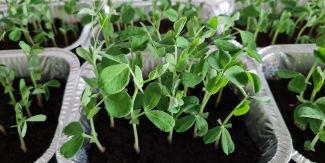
Opening figure. Pisum sativum subspecies arvense (forage pea), one of the orphan legumes investigated in the frame of the PROSPER project. It is used to produce hih-quality fodder. Credit: A. Balestrazzi.
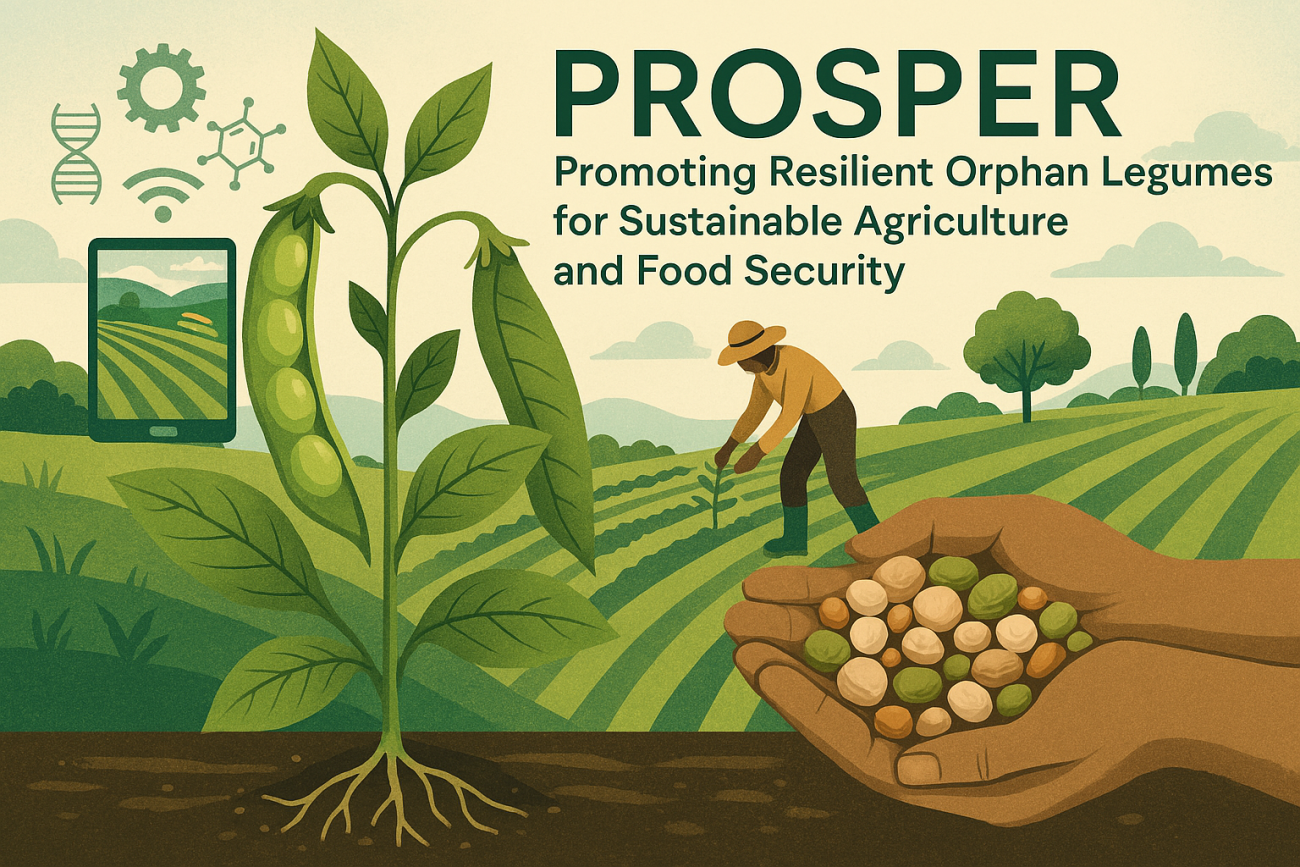
Figura 2. PROSPER: orphan legumes as tools for promoting innovation, biodiversity and resilience in the context of climate change. Credit: D. Dondi.
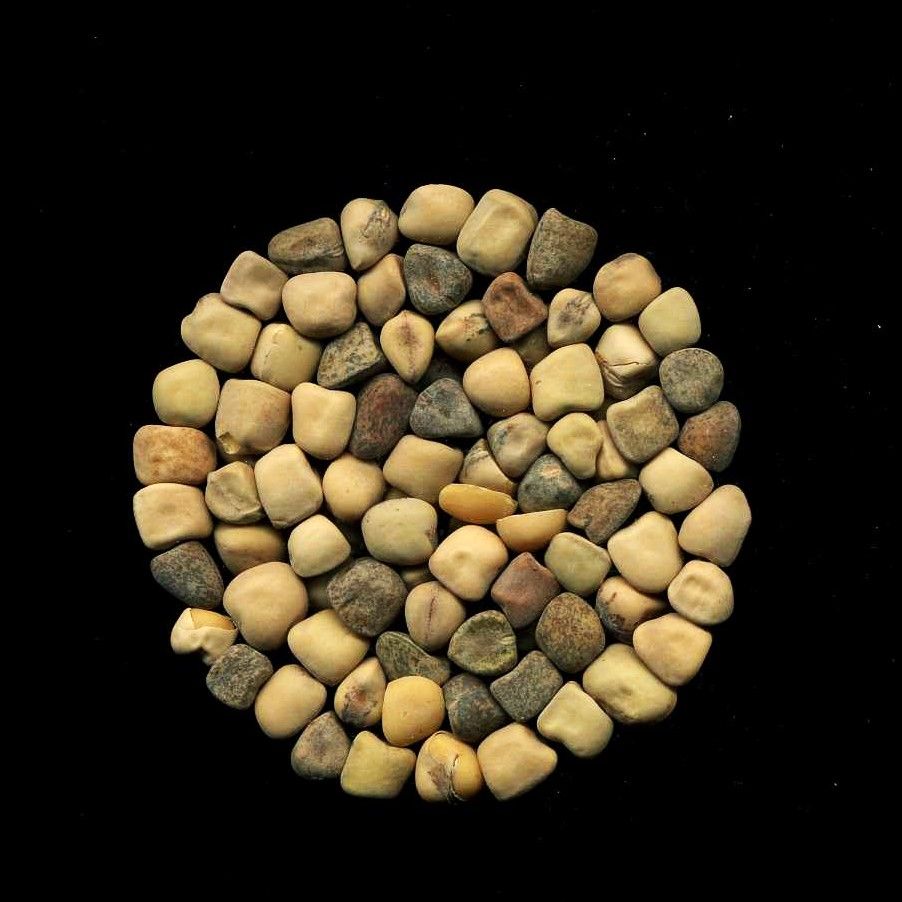
Figura 3. Seeds of grass pea (Lathyrus sativus L.), one of the neglected legume species targeted by PROSPER. Besides the many food-applications, grass pea is also know as “insurance crop” for its ability to ensure high productivity under adverse environmental conditions. Credit: C. Duenas.
Figura 4. Seeds of fenugreek (Trigonella foenum-graecum L.), one of the neglected legume species targeted by PROSPER. Fenugreek seeds, rich in dietary fiber, are used as spices and for therapeutic purposes. Credit: C. Duenas.