Dall'Iraq a Pavia per diventare ingegneri, attenti alla sostenibilità. Laureati sei studenti internazionali: «Il Foundation Year è stato fondamentale»
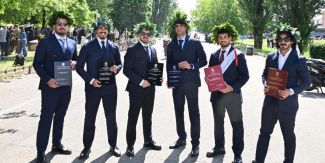
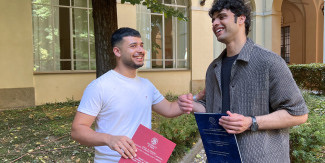
(English below) Sei neolaureati iracheni indossano la corona d'alloro nel cortile del Polo di Ingegneria dell'Università di Pavia. Lo scatto, realizzato poco prima dell'estate, li ritrae con la tesi tra le mani e il sorriso di chi ha appena concluso un percorso intenso, impegnativo ma ricco di soddisfazioni. Hasanain Al Mansoori, Mohammed Radhid Dhmaid, Mohammed Kadhim Mohammed Alhasan, Mohammed Sadik Zain Ghazi Al-Sarray, Hussein Ali Mohan Al-Bujarad e Mustafa Nader Hasan sono arrivati a Pavia nell'ottobre 2021 grazie al programma ENI Future Builders per frequentare il corso di laurea triennale in Ingegneria Civile, oggi concluso con successo.
Un percorso reso possibile a partire dal Foundation Year dell’Università di Pavia, il programma propedeutico progettato per accompagnare gli studenti internazionali verso l'ingresso nel sistema universitario italiano. Della durata di nove mesi, il percorso combina uno studio intensivo della lingua italiana (fino al livello B2) con insegnamenti specifici di area scientifica, umanistica o sociale. Un ponte accademico e culturale, pensato per preparare gli studenti a superare i test d'ingresso e a integrarsi con successo nella comunità universitaria.
Foundation Year: «Mi ha salvato la vita»
«Siamo partiti da zero!», afferma Hasanain Al Mansoori, ripercorrendo il primo anno nell’ateneo lombardo. «Ho sempre desiderato studiare ingegneria: avevo già frequentato due anni in un istituto iracheno orientato all'ingegneria energetica. A Pavia ho trovato l’opportunità di frequentare una facoltà molto interessante, che offre molte prospettive professionali».
Così è stato anche per Mohammed Radhid Dhmaid, che in questo corso di laurea ha trovato la base per poter costruire la propria carriera. «Il primo impatto non è stato semplice - afferma - appena arrivati era tutto una novità, non conoscevamo nulla, a partire dalla lingua. Il Foundation Year mi ha salvato la vita. In un anno abbiamo imparato tutto ciò che è necessario a vivere qui e frequentare la vita accademica. È stato fondamentale: imparare l’italiano non è semplice, soprattutto quando si tratta di materie di studio… Poi piano piano si impara, no?»
Ingegneria: il futuro è sostenibile
Tra le mani tiene la tesi dedicata alla progettazione di “Solai a piastra in cemento armato senza travi”. «È uno studio orientato a lavorare in Iraq», prosegue. «L’obiettivo è tornare a casa: non so ancora cosa mi aspetta in futuro, vorrei diventare un ingegnere di successo, fare un po’ di pratica e poi magari aprire una mia azienda».
Hassanain si è occupato invece di “Isolamento termico e sostenibilità dinamica”, realizzando uno studio su i materiali isolanti tradizionali e materiali naturali alternativi. «La sostenibilità è un fattore che non può più essere ignorato», afferma ripercorrendo i punti salienti della tesi di laurea, che ritrova nell’attenzione all'ambiente un elemento ricorrente. «Un nostro compagno ha dedicato il suo lavoro al riuso delle acque reflue - ricorda - siamo in un mondo caratterizzato da molti fattori, tra cui il cambiamento climatico. Occuparsi di ingegneria significa tener presente anche questo aspetto. L’esperienza sul campo è preziosa: mentre studiavo a Pavia ho lavorato in uno studio a Milano, è stato utile e interessante, che sicuramente mi servirà».
Guardando al futuro, Hassanain non ha dubbi: «Mi piacerebbe proseguire con laurea magistrale e dottorato, ma prima vorrei lavorare qualche anno per capire come orientare i miei studi. Tornerò in Iraq, per mettere in pratica tutto ciò che ho imparato qui».
***
From Iraq to Pavia to become engineers with a focus on sustainability. Six international students have graduated: ‘The Foundation Year was crucial’
The six Iraqi graduates are pictured wearing laurel wreaths in the courtyard of the University of Pavia’s Engineering Campus. Taken just before the summer, the photograph shows them holding their theses and smiling with the satisfaction of those who have just completed an intense, demanding but deeply rewarding journey. Hasanain Al Mansoori, Mohammed Radhid Dhmaid, Mohammed Kadhim Mohammed Alhasan, Mohammed Sadik Zain Ghazi Al-Sarray, Hussein Ali Mohan Al-Bujarad and Mustafa Nader Hasan arrived in Pavia in October 2021 through the ENI Future Builders programme to study for a three-year Bachelor’s degree in Civil Engineering, which they have now successfully completed.
This path was made possible through the Foundation Year at the University of Pavia. It is a preparatory programme designed to support international students as they enter the Italian university system. Lasting nine months, it combines intensive Italian language study (up to level B2) with specific modules in the sciences, humanities or social sciences. It is an academic and cultural bridge designed to prepare students to pass their entrance exams and integrate successfully into the university community.
“The foundation year saved my life.”
'We started from scratch!', says Hasanain Al Mansoori, reflecting on his first year at the University of Pavia. 'I’ve always wanted to study engineering. I’d already spent two years at an Iraqi college specialising in energy engineering. In Pavia, I found the opportunity to study at a very interesting faculty which offers plenty of career prospects.”
This was also the case for Mohammed Radhid Dhmaid, who found in this degree programme the foundation on which to build his career. “It wasn’t easy at first,” he says. “When we first arrived, everything was new; We didn’t know anything, starting with the language. The Foundation Year saved my life. In one year, we learnt everything we needed to know to live here and take part in academic life. It was absolutely crucial: learning Italian isn’t easy, especially when it comes to academic subjects… But you pick it up bit by bit, don’t you?"
Engineering: the future is sustainable
He is holding his thesis on the design of “Reinforced concrete slab floors without beams”. “It’s a project geared towards working in Iraq,” he continues. “My aim is to go home: I don’t yet know what the future holds for me, but I’d like to become a successful engineer, gain some practical experience and then perhaps set up my own company.”
Hassanain, on the other hand, focused on 'Thermal insulation and dynamic sustainability', carrying out a study on traditional and alternative natural insulating materials. “Sustainability is a factor that can no longer be ignored,” he says, summarising the key points of his thesis, which has an underlying environmental focus. ‘One of our colleagues has dedicated his work to the reuse of wastewater,’ he recalls. ‘We live in a world shaped by many factors, including climate change. Working in engineering means taking this aspect into account as well.”
Practical experience is invaluable. ‘While I was studying in Pavia, I worked at a consultancy in Milan. It was a useful and interesting experience that will certainly stand me in good stead.’ Looking to the future, Hassanain has no doubts. ‘I’d like to do a Master’s and a PhD, but first I’d like to work for a few years to decide which direction to take with my studies. Then I’ll return to Iraq to put everything I’ve learnt here into practice.”