


Giacomo Guarnieri, uno dei 36 vincitori del programma “Rita-Levi Montalcini” per il rientro dei cervelli, sceglie l’Università di Pavia per la sua ricerca in Termodinamica Quantistica
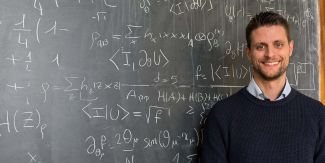
(English below) Dopo aver completato un dottorato in Fisica a Milano nel 2017, il Dr. Guarnieri, 36 anni, ha costruito una carriera internazionale di successo prima come Research Fellow al Trinity College di Dublino e poi come vincitore di un prestigioso grant Marie Skłodowska-Curie Actions alla Freie Universität di Berlino.
Da qui il rientro in Italia, prima come RTDB presso l’Ateneo pavese e poi come vincitore di una delle borse “Montalcini”, solamente 36 tra tutti gli ambiti di ricerca sia scientifico che umanistico, istituite dal Ministero dell’Università (MUR) per promuovere il rientro dei cervelli nel nostro Paese, che gli permetterà di diventare Professore Associato in un paio di anni.
Il progetto finanziato, intitolato “TESEO - TErmodinamica di preciSione e teoria dell’informazionE in dispOsitivi quantistici”, si propone l’ambizioso obiettivo di determinare, in maniera nuova e interdisciplinare, il costo termodinamico ultimo necessario ad operare con una precisione desiderata le tecnologie quantistiche del futuro, come macchine termiche a livello atomico, sensori ultra- precisi e computer quantistici.
«È stata una decisione importante e ho scelto di proseguire il mio percorso di ricerca qui a Pavia perché, oltre ad avere trovato un Dipartimento (Dipartimento di Fisica n.d.r.) che offre un ambiente scientifico di grande stimolo e spessore umano, qui sento e spero di poter dare un contributo allo sviluppo della Fisica Quantistica in Italia» ha dichiarato Guarnieri.
Questa scelta risulta ancora più significativa alla luce di un ulteriore grant da circa 1,6 milioni di euro vinto dal Dr. Guarnieri nel programma “University Research Fellowship” (SFI-URF) per costruire e finanziare il suo gruppo di ricerca di Termodinamica Quantistica presso l’Università di Dublino. La decisione di declinare quest’ultimo, per investire il proprio talento in Italia, rappresenta un esempio di “cervello di ritorno” che arricchisce il panorama accademico del nostro Paese e del nostro Ateneo.
***
Giacomo Guarnieri, one of 36 winners of the ‘"Rita-Levi Montalcini" programme, chooses the University of Pavia for his research in Quantum Thermodynamics
After completing a PhD in Physics at the University of Milan in 2017, Dr. Guarnieri, 36, built a successful international career first as a Research Fellow at Trinity College Dublin and then as the winner of a prestigious Marie Skłodowska-Curie Actions grant at Freie Universität Berlin.
Hence his return to Italy, first as an RTDB at the University of Pavia and then as the winner of one of the "Montalcini" grants, only 36 among all research fields, both scientific and humanistic, set up by the Ministry of Universities (MUR) to promote the so-called “return of brains" to our Country, which will enable him to become an Associate Professor in a couple of years.
The funded project, entitled "THESEUS - THermodynamics of prEciSion and information thEory in qUantum deviceS", has the ambitious goal of determining, in a new and interdisciplinary way, the ultimate thermodynamic cost necessary to operate the quantum technologies of the future, such as atomic-level thermal machines, ultra-precise sensors and quantum computers, with the desired precision.
«It has been an important decision and I chose to continue my research path here in Pavia because, in addition to having found a Department (Department of Physics editor's note) that offers a vibrant environment both on a scientific/ professional and on a personal level, here I feel and hope to be able to make a contribution to the development of Quantum Physics in Italy» said Guarnieri.
This choice is even more significant in light of a further grant of around €1.6 million won by Dr. Guarnieri within the University Research Fellowship (SFI-URF) programme to build and fund his Quantum Thermodynamics research group at the University of Dublin. His decision to decline the latter, in order to invest his talent in Italy, represents an example of a ‘returning brain’ that enriches the academic landscape of our country and our University.