


Le European University Alliances come laboratori di innovazione
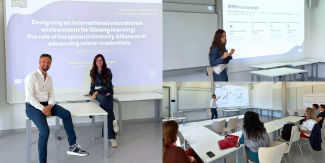
(English below) Dal 16 al 18 settembre 2026, la Academy for Continuing Education and Human Resource Development della Frankfurt University of Applied Sciences ha ospitato la conferenza annuale della German Association for Continuing Education and Distance Learning (DGWF), dedicata quest’anno al tema “Future Lab Continuing Education”.
Il meeting ha riunito università ed esperti europei con l’obiettivo di discutere nuovi scenari per la formazione continua. Al centro del confronto anche il ruolo delle European University Alliances nel promuovere modelli educativi più flessibili e internazionali, capaci di sostenere percorsi di apprendimento lungo tutto l’arco della vita.
In qualità di co-leader del Work Package 8 “Lifelong Career” dell’Alleanza EC2U, l’Università di Pavia ha portato un intervento per la sessione “A Future International Educational Environment”. Stefania Mellera, membro del WP8 e rappresentante EC2U nel progetto ALLIES - FOREU4ALL, e Luigi Santangelo, Digital Officer e Technical Coordinator dell’EC2U Connect Centre, hanno presentato la Lecture and Discussion dal titolo “Designing an International Educational Environment for Lifelong Learning: The Role of European University Alliances in Advancing Micro-Credentials”.
ALLEANZE EUROPEE STRATEGICHE
L’intervento ha presentato l’esperienza dell’Alleanza EC2U (European Campus of City-Universities) come possibile modello per integrare il lifelong learning all’interno di un ecosistema universitario transnazionale. Attraverso opportunità formative (micro-credentials) condivise tra le università partner, EC2U sta lavorando alla costruzione di un ambiente di apprendimento europeo più flessibile e learner-centered, capace di mettere in relazione differenti sistemi accademici.
«La Commissione europea individua nelle European University Alliances uno degli strumenti strategici per costruire uno spazio europeo dell’istruzione sempre più integrato», sottolinea Stefania Mellera. «Le Alleanze possono diventare veri e propri laboratori di innovazione, nei quali sperimentare nuovi modelli di formazione continua e lavorare su standard condivisi. Micro-credentials e Open Badge possono contribuire a trasformare una pluralità di opportunità formative locali in un ecosistema più trasparente e internazionale, rendendo la conoscenza prodotta dalle università accessibile anche a nuovi pubblici e ai non-traditional learners (professionisti, cittadini) lungo tutto l’arco della vita».
COSTRUIRE UN’ESPERIENZA DIGITALE COMUNE
Un secondo elemento centrale nell’esperienza EC2U riguarda la costruzione dell’infrastruttura digitale necessaria a sostenere questo nuovo ecosistema formativo.
«Per rendere realmente accessibile un’offerta di lifelong learning internazionale occorre costruire anche un’esperienza digitale comune e semplice per chi apprende e per chi gestisce i processi», evidenzia Luigi Santangelo. «In EC2U stiamo lavorando in questa direzione attraverso lo Shared Knowledge Hub e il Joint Application Tool, che consentono di promuovere le opportunità formative, semplificare i workflow amministrativi e collegare progressivamente il percorso alla certificazione digitale tramite Open Badge».
Il confronto alla DGWF Annual Conference ha quindi offerto l’occasione per presentare il percorso sviluppato all’interno di EC2U e, allo stesso tempo, per riflettere sul ruolo più ampio delle European University Alliances come ambienti strategici di sperimentazione per il futuro di una formazione continua più aperta, flessibile e inclusiva.
****
European University Alliances as laboratories for innovation: the EC2U experience in lifelong learning presented at the DGWF Annual Conference
From 16 to 18 September 2026, the Academy for Continuing Education and Human Resource Development of the Frankfurt University of Applied Sciences hosted the annual conference of the German Association for Continuing Education and Distance Learning (DGWF), dedicated this year to the theme “Future Lab Continuing Education”.
The meeting brought together European universities and experts to discuss new scenarios for continuing education. The role of European University Alliances in promoting more flexible and international educational models, capable of supporting lifelong learning pathways, was also at the centre of the discussion.
As co-leader of Work Package 8 “Lifelong Career” of the EC2U Alliance, the University of Pavia contributed to the session “A Future International Educational Environment”. Stefania Mellera, WP8 member and EC2U representative in the ALLIES - FOREU4ALL project, and Luigi Santangelo, Digital Officer and Technical Coordinator of the EC2U Connect Centre, presented the Lecture and Discussion entitled “Designing an International Educational Environment for Lifelong Learning: The Role of European University Alliances in Advancing Micro-Credentials”.
STRATEGIC EUROPEAN ALLIANCES
The presentation showcased the experience of the EC2U Alliance (European Campus of City-Universities) as a possible model for integrating lifelong learning into a transnational university ecosystem. Through shared educational opportunities, including micro-credentials, EC2U is working to build a more flexible and learner-centred European learning environment capable of connecting different academic systems.
“The European Commission identifies European University Alliances as one of the strategic tools for building an increasingly integrated European Education Area,” explains Stefania Mellera. “Alliances can become genuine laboratories for innovation, where new models of continuing education can be tested and shared standards developed. Micro-credentials and Open Badges can help transform a plurality of local learning opportunities into a more transparent and international ecosystem, making the knowledge produced by universities accessible to new audiences and non-traditional learners (professionals and citizens) throughout their lives.”
BUILDING A SHARED DIGITAL EXPERIENCE
A second key element of the EC2U experience concerns the development of the digital infrastructure needed to support this new educational ecosystem.
“To make an international lifelong learning offer truly accessible, we also need to create a shared and user-friendly digital experience for both learners and those managing the related processes,” explains Luigi Santangelo. “Within EC2U, we are working in this direction through the Shared Knowledge Hub and the Joint Application Tool, which make it possible to promote learning opportunities, simplify administrative workflows and progressively connect the learning pathway to digital certification through Open Badges.”
The DGWF Annual Conference therefore provided an opportunity to present the work developed within EC2U while also reflecting on the broader role of European University Alliances as strategic environments for experimentation in shaping a more open, flexible and inclusive future for continuing education.