


China-GDR Relations from 1949 to 1989. The (Bad) Company You Keep
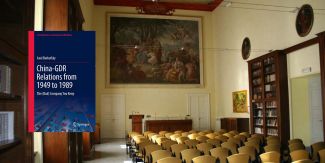
(English below) Mercoledì 29 ottobre 2025, alle ore 21:00, il Collegio F.lli Cairoli è lieto di ospitare in Aula Magna la presentazione del libro (in lingua inglese) "China-GDR Relations from 1949 to 1989. The (Bad) Company You Keep" di Axel Berkofsky.
Questo libro offre un'analisi approfondita e molto vivace delle relazioni tra la Cina e la Repubblica Democratica Tedesca (RDT) dal 1949 al 1989. Si tratta della prima e unica analisi completa e dettagliata in lingua inglese dei legami e delle interazioni tra la Germania dell'Est e la Cina. Le relazioni tra Cina e Germania dell'Est, che nel corso dei decenni hanno conosciuto alcuni “alti” ma molti più “bassi”. I momenti più bui sono emersi all'inizio degli anni '60, quando l'Unione Sovietica ordinò al suo stato vassallo di Berlino Est di trattare il suo ex compagno socialista e fratello d'armi di Pechino come un avversario e persino un nemico. Infatti, la “rottura sino-sovietica” fece sì che fino alla fine degli anni '80 Berlino Est e Pechino fossero più propense a parlare l'una dell'altra che a dialogare tra loro.
La seconda edizione rivista e ampliata del libro attinge a un ricco materiale d'archivio della Germania dell'Est. Si tratta di documenti e relazioni provenienti dagli archivi del Partito Socialista Unificato (SED), il partito al potere nella DDR, dal famigerato Ministero della Sicurezza di Stato (Stasi) e dal Ministero degli Affari Esteri. Insieme a un'ampia letteratura secondaria e a quasi tutto ciò che è stato scritto sulla Cina dai giornali della Germania dell'Est dal 1950 al 1990, questo libro esamina questioni e aree selezionate della politica interna ed estera della Germania dell'Est e della Cina, collocando le politiche e le interazioni nel loro contesto storico. Offre approfondimenti molto dettagliati e ben documentati sui seguenti aspetti:
- il “periodo di luna di miele” bilaterale dal 1949 alla fine degli anni '50, durante il quale entrambe le parti sostenevano e applaudivano le rispettive politiche economiche interne oppressive, tra cui il Grande Balzo in Avanti e la Rivoluzione Culturale di Mao;
- gli anni '60, quando la “rottura sino-sovietica” determinò la qualità e il livello delle interazioni e delle tensioni bilaterali;
- gli anni '70, quando Pechino sostituì il cameratismo socialista con Berlino Est con il commercio e gli aiuti provenienti dagli Stati Uniti e dalla Germania;
- la ripresa delle relazioni bilaterali negli anni '80. Gli anni '70, quando Pechino sostituì il cameratismo socialista con Berlino Est con il commercio e gli aiuti provenienti dagli Stati Uniti e dalla Germania Ovest;
- La ripresa delle relazioni sino-tedesche negli anni '80 e il periodo successivo fino alle proteste di piazza Tienanmen e al crollo della DDR nel 1989.
Il libro è rivolto a storici, politologi e studiosi di relazioni internazionali, nonché a politici e diplomatici interessati a questo settore poco studiato.
Axel Berkofsky è professore associato presso il Dipartimento di Scienze Politiche e Sociali dell'Università di Pavia. È stato delegato dell'Università di Pavia per l'Asia e la regione Asia-Pacifico. Inoltre, il Prof. Berkofsky è co-direttore dell'Asia Centre presso l'Istituto per gli Studi di Politica Internazionale (ISPI) con sede a Milano e ricercatore affiliato presso l'Istituto Europeo di Studi Giapponesi della Stockholm School of Economics. È anche co-fondatore e membro del comitato esecutivo dell'European Japan Advanced Research Network (EJARN) con sede a Stoccolma e membro del comitato esecutivo della Canon Foundation. In precedenza, il dottor Berkofsky ha lavorato come analista politico senior e analista politico associato senior presso l'European Policy Centre (EPC) con sede a Bruxelles e come ricercatore senior presso l'European Institute for Asian Studies (EIAS) con sede a Bruxelles. Ha pubblicato libri, numerosi articoli su riviste, saggi, documenti di ricerca e articoli di giornale ed è stato corrispondente freelance per l'Asia Times. Axel ha insegnato e tenuto conferenze in numerosi think tank, istituti di ricerca e università in Europa e Asia. I suoi interessi di ricerca sono la storia cinese, la politica e la storia della Guerra Fredda in Asia, le politiche estere e di sicurezza giapponesi e cinesi e le relazioni UE-Cina/UE-Giappone.
***
Wednesday, 29 October, 9:00 p.m. the Cairoli College is pleased to host the presentation of the book in the Aula Magna "China-GDR Relations from 1949 to 1989. The (Bad) Company You Keep".
This book provides an in-depth and very lively analysis of relations between China and the German Democratic Republic (GDR) from 1949 to 1989. It is the first and only comprehensive and detailed analysis of East German-Chinese ties and interactions in English. Chinese-East German relations, which over the decades have experienced some "highs" but many more "lows". " Low points came to the fore in the early 1960s when the Soviet Union ordered its vassal state in East Berlin to treat its former socialist comrade and brother-in-arms in Beijing as an adversary and even an enemy. In fact, the "Sino-Soviet split" ensured that until the late 1980s East Berlin and Beijing were more likely to talk about each other than to talk to each other.
The second revised and extended edition of the book draws on a wealth of East German archival material. These include documents and reports from the archives of the GDR's ruling Socialist Unity Party (SED), the notorious East German Ministry of State Security (Stasi), and the Ministry of Foreign Affairs. Together with extensive secondary literature and almost everything that was ever written about China in East German newspapers from the 1950s to 1990, this book examines selected issues and areas of East German and Chinese domestic and foreign policy, placing policies and interactions in their historical context.
It offers very detailed and well-documented insights into the following aspects:
- the bilateral "honeymoon period" from 1949 to the late 1950s, during which both sides supported and applauded each other's oppressive domestic economic policies, including Mao's Great Leap Forward and the Cultural Revolution;
- the 1960s, when the "Sino-Soviet split" determined the quality and level of bilateral interactions and tensions;
- the 1970s, when Beijing replaced socialist comradeship with East Berlin with trade and aid from the US and Germany;
- the resumption of bilateral relations in the 1980s. The 1970s, when Beijing replaced socialist comradeship with East Berlin with trade and aid from the US and West Germany;
- The resumption of Sino-German relations in the 1980s and the subsequent period up to the Tiananmen Square protests and the collapse of the GDR in 1989.
The book will appeal to historians, political scientists and international relations scholars, as well as policymakers and diplomats interested in this under-researched area.
Axel Berkofsky is Associate Professor at the Department of Political and Social Sciences at the University of Pavia. He was the University of Pavia’s Delegate for Asia and the Asia-Pacific Region. Furthermore, Prof. Berkofsky is Co-Head of the Asia Centre at the Milan-based Istituto per gli Studi di Politica Internazionale (ISPI) and Research Affiliate at the European Institute of Japanese Studies at the Stockholm School of Economics. Furthermore, he is co-founder and Executive Committee Board Member at the Stockholm-based European Japan Advanced Research Network (EJARN) and Member of the Executive Committee of the Canon Foundation. Previously, Dr. Berkofsky has worked as Senior Policy Analyst and Senior Associate Policy Analyst at the Brussels-based European Policy Centre (EPC) and Senior Research Fellow at the Brussels-based European Institute for Asian Studies (EIAS). He has published books, numerous journal articles, essays, research papers and newspaper articles and is former freelance correspondent for the Asia Times. Axel has taught and lectured at numerous think tanks, research institutes and universities in Europe and Asia. His research interests are Chinese history, Cold War Politics and History in Asia, Japanese Chinese foreign and security policies and EU-China/EU-Japan relations.